

Seeing Christ in Those Whom We Serve
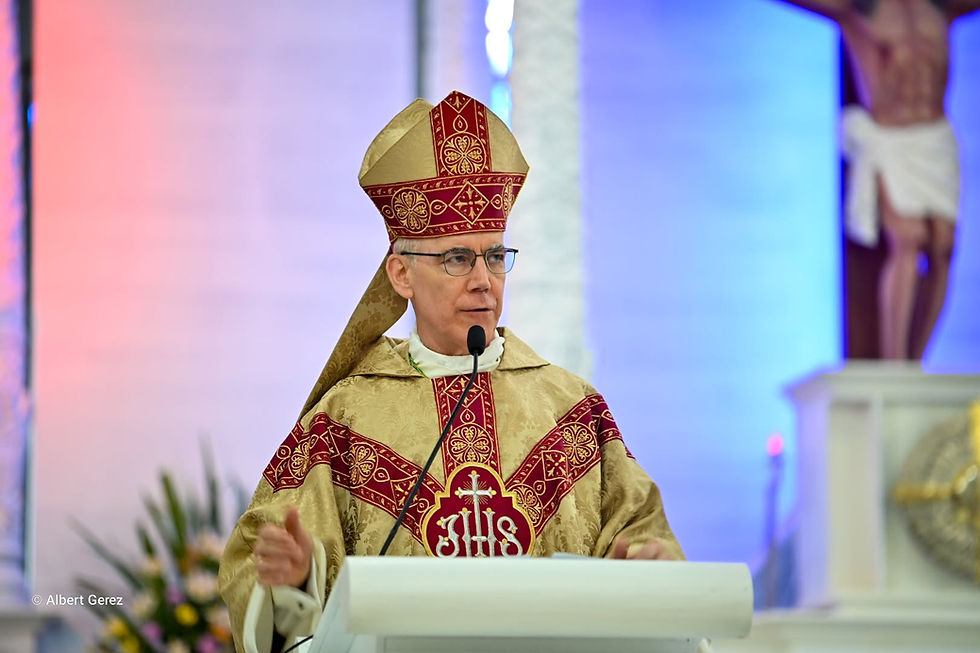
Homily of H.E., Most Rev. Charles John Brown, D.D., Apostolic Nuncio to the Philippines
July 31, 2026 Feast of St. Ignatius of Loyola, Patron Saint of the Military Ordinariate of the Philippines
40th Founding Anniversary of the Military Ordinariate of the Philippines
St. Ignatius of Loyola Cathedral Camp Aguinaldo, Quezon City
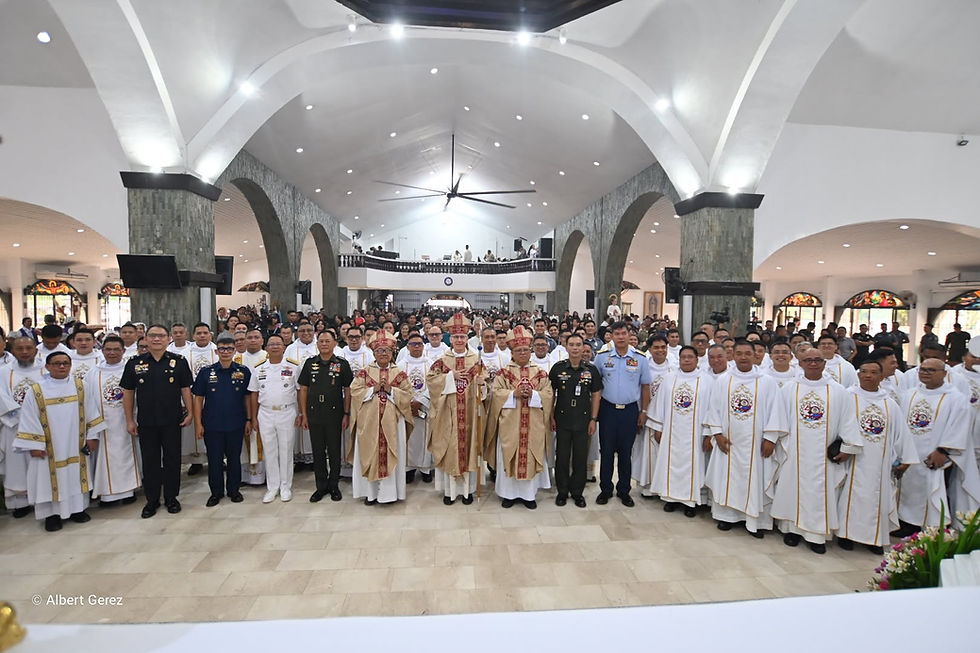
Your Excellency, the Most Rev. Oscar Jaime Florencio, Bishop of the Military Ordinariate of the Philippines; Your Excellency, the Most Rev. Ramon C. Arguelles, Archbishop Emeritus of Lipa; officials from the Armed Services and the Uniformed Service of the Philippines, gathered here in this beautiful cathedral, the St. Ignatius of Loyola Cathedral [Camp General Emilio Aguinaldo]:
Photos by St. Ignatius of Loyola Cathedral, (Albert Gerez)
For me, as the Apostolic Nuncio, that is, the diplomatic representative of Pope Leo XIV here in the Philippines, it gives me a lot of joy and happiness to be with you this morning to celebrate this Mass, in celebration of the 40th Anniversary of the Foundation of the Military Ordinariate of the Philippines.
I'm delighted to have come this morning with my two colleagues from the Apostolic Nunciature, Monsignor Giuseppe Trentadue and Monsignor Guilherme De Melo Sanches; and we are very, very grateful. I'm personally grateful for the wonderful welcome that was accorded to me when I arrived here this morning.
History of the Military Ordinariate of the Philippines
The journey of the military ordinariate began some 75 years ago, in December of 1950, with the establishment of what was then called the “Military Vicariate” here in the Philippines, during the pontificate of Pope Pius XII (Consistorial Decree Ad Consulendum). Then, 40 years ago, in July of 1986, given the need for greater extension of the services of the military vicariate, it was elevated to the status of a military ordinariate during the pontificate of the now Saint John Paul II (Spirituali Militum Curae), and given the important mission of providing spiritual care and pastoral accompaniment to those of you who dedicate your lives of service to the Filipino nation.
So, from its beginnings as the ministry dedicated to the Armed Forces of the Philippines (AFP), the mission of the Military Ordinariate expanded to embrace also, as we know, the Philippines National Police (PNP), the Philippine Coast Guard (PCG), the Bureau of Fire Protection (BFP), the Bureau of Jail Management and Penology (BJMP), and the Veterans Memorial Medical Center (VMMC).
So, we see this expanding work overtime of the Military Ordinariate; and this is a very important and significant thing to celebrate.
Photos by St. Ignatius of Loyola Cathedral, (Albert Gerez)
Service to Others
As we heard in the Gospel this morning, Jesus says at the very end of the gospel, “Every one of you who does not renounce all his possessions cannot be my disciple.”
Let us reflect on the idea of renouncing our possessions to serve others. The Military Ordinariate is all about service. When we look at the Military Ordinariate, we see your wonderful patron, Saint Ignatius of Loyola, a soldier who became a saint. One in a long line of soldiers who became saints.
In fact, in the United States, after the Second World War, when the soldiers returned to the United States after fighting here in the Far East and in Europe, a good number of them entered the priesthood or religious life. There was an expansion of vocations of soldiers who entered religious life after World War II in America.
So, it's always been that connection between the life of the military and the life of the Church. In a certain sense, the values of the military: discipline, dedication, self-giving, are the values of the Church as well, and the values of ministry in the Church.
Your patron is, of course, Saint Ignatius of Loyola, who lived in the 16th century in the 1500s. As many of us know, was injured in a battle as a soldier. Then during his recuperation, began to read spiritual books, and he was converted from being a soldier who wasn't really living a Catholic life, to becoming a soldier of Christ and founding the Jesuit order, which has sent missionaries all over the world.
Saint Martin of Tours
This morning, I'd like to go back before Saint Ignatius for a moment. I want to take you back 1,200 years before your patron saint, Saint Ignatius, to another soldier-saint who is very, very important for all of you. Especially those of you who are chaplains.
Who am I thinking of? I'm thinking of a Roman soldier back in the fourth century, whom we know as Martin of Tours. Saint Martin of Tours. What is the story of Martin of Tours? He was a catechumen. That means, he was already converted to Jesus, but he was a Roman soldier in the Roman soldier's army.
One day, still as a catechumen, he was riding his horse towards the city in France called Amiens. There, on the side of the road, he saw a man, begging, who was scantily clad, almost naked. A man with no clothes, shivering in the cold of that day. Saint Martin was moved to compassion for this beggar. Traditionally, he took his sword, and he took his cloak or his cape, and he cut the cape in half. The capa in Latin. He cut the cape in half, gave half to the beggar by the side of the road, and continued on his way. That night he fell asleep and he had a dream, in which he saw Jesus in heaven speaking to the angels. What did Jesus say? He said, “Martin, who is still only a catechumen, has clothed me with this robe,” and he saw Jesus with the half of the cape that he had given to the beggar.
To See Christ in Others
This is a very important scene in the history of the Church. There are countless paintings of Martin cutting his cloak, his capa, and giving it to the beggar. It teaches us, first of all, the responsibility of all of us to see Christ in others. Martin helped this poor beggar, and then later on in that dream, he sees that the beggar was actually an image of Christ, and Christ in heaven is being clothed with the half of the cape of Saint Martin.
To see Christ in those whom we serve.
Why is this important for us in the military? Because the word “chaplain”, which you use every single day, is a reference to St. Martin and his cape. Why do we call these priests chaplains? Because in the French army, after the time of Saint Martin, they kept the cape of Martin that was given to the beggar as a relic, a holy relic. They kept it in a beautiful chest, and they gave the chest to the responsibility of a priest or a cleric who served the army. Because he was taking care of this chest, this container in which they had the capa, the priest who took care of it was called the “cappellanus”, from which we get “chaplain”.
So, every time we say the word “chaplain”, we're talking about the Cape of Saint Martin that he divided. This soldier who became a saint, later became a bishop. In fact, one of the greatest saints of the early church. So, the title chaplain comes from the cape, the capa of St. Martin—Cappellanus, Chaplain, and even Chapel where we worship, all a reference to the Cape of Martin.
This is a deeply significant point for us theologically. Because it means that we, as chaplains, have to imitate our patrons, Saint Martin. In that sense, to see Christ in others. That's what it means to serve as a chaplain: to be able to have eyes that distinguish, that discern the presence of Jesus in others. When we serve others as chaplains, we are serving Christ, just like Saint Martin divided his cloak to serve and to protect this poor beggar.
So, this amazing convergence of themes this morning, as we celebrate this 40th anniversary of the establishment, or we should say the elevation of the Military Vicariate to the status of a Military Ordinariate. Today we say a massive “thank you to God” for all the chaplains in these different armed services and uniformed services in the Philippines, who have served so selflessly, so beautifully in these 40 years.
We thank God for all the blessings that have been bestowed through their ministry, all the graces that have been showered upon countless people, whether in the army, the navy, whether they're in the coast guard or in the prison service. All the graces that have been showered upon people because of the Military Ordinariate of the Philippines, this is something for which we say to God, “Thank you.”
We dedicate ourselves at this moment to service. We should ask ourselves always, “Whom are we serving?” Jesus says in the Gospel, “Unless you renounce your possessions, you cannot be my disciple.” That means, we cannot serve ourselves. We should not be serving ourselves. We will be serving others and seeing Christ in others, the image of Christ in our brothers and sisters, as Saint Martin did by dividing his cape.
Photos by St. Ignatius of Loyola Cathedral, (Albert Gerez)
Conclusion and Final Exhortations
Finally, we do all of these things under the watchful eyes of Our Lady, the beautiful, all holy, all wonderful Mother of God. Mary, who is always interceding for us. Mary, who's always guiding us in her own very special maternal way. We thank Mary for guiding all the chaplains and the different ministers of the military ordinariate over these years. Mary, who is our mother, Mary, who is our queen, Mary, who teaches us what it means to serve. Mary, of course, receives the baby Jesus in her womb and serves Him as His mother.
We and the chaplaincies of the different armed forces and uniformed services serve Jesus when we take care of our brothers and sisters.
So, in the name of Pope Leo XIV, I congratulate you on this 40th anniversary. I ask God to bless you to continue to shower graces upon all the people whom you serve so generously and so beautifully.
Happy 40th Anniversary.
May God bless you!


Comments