

Worthy Guests
Gospel reflection by Fr. Earl Allyson Valdez
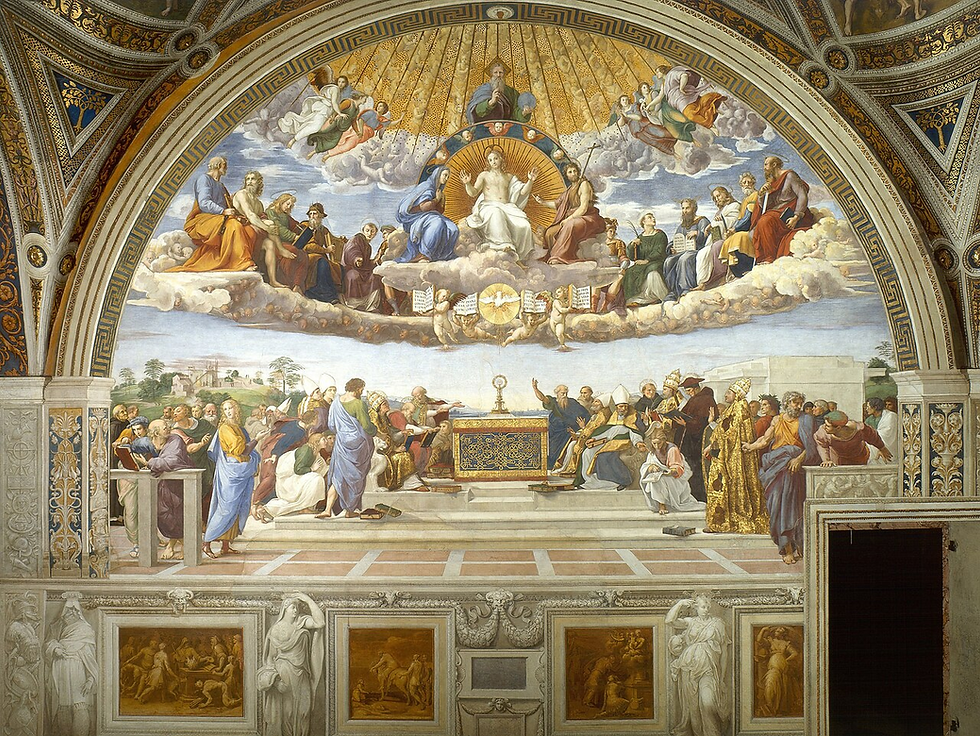
Raphael, “The Disputation of the Holy Sacrament” | Photo from Wikimedia Commons
I once heard this as a word from the wise: if one is holding a feast and wants to invite Filipinos, the first thing that one should do is this: Do not require them to come. Let it not be an obligation that one must attend; rather, give a very gentle invitation, with an impression that it is for the sake of fellowship that you demand your guests to come. Do not expect them to say yes right away, and give them time to think about it.
Most likely, the answer will come, and it will be a yes, we will see you, even if just for a while.
The secret in this kind of conversation is that invitations are supposed to be freely made, and that the response depends not on availability but on the quality of relationship between the one who invited and the guests. From the outside, it feels like putting a sense of obligation and, in a way, “guilt-tripping” somebody for choosing to not attend a feast or a gathering. However, from the perspective of social relationships and obligations, the invitation is not so much a partaking in a social event; rather, it is about freely placing our relationship on the line, saying that the feast, celebration, or banquet is about the social bonds that we have formed, a relationship that is forged by a sense of indebtedness to one who considers another as a companion in life.
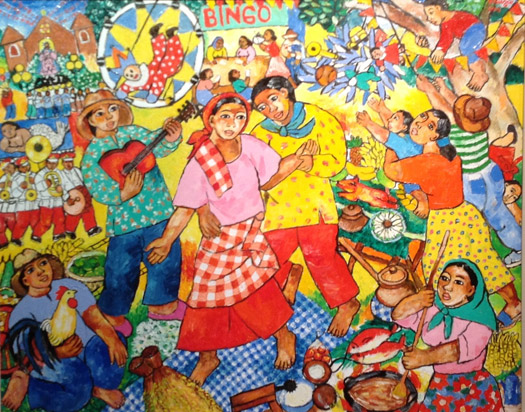
Antonio and Belleza, “Fiesta.” | Image from Charlie’s Art Gallery
And if we think about it, it’s a good lens through which we can understand the readings today. The Lord likened the Kingdom of God, of all things, to a banquet in which, at first, distinguished and known guests were invited. But since nobody came, the King opened the invitation for everybody, but under one condition: that they become guests that are fitting for the celebration, especially with the way they dress.
However (and this is an important point), if they failed to dress up and groom themselves, they would be sent out of the banquet, even punished for doing so. And in fact, it’s less about coming in improper attire, and more of having the guts to show disrespect to the guest and to the newly married. Having the proper wedding attire means that one is prepared enough for a special occasion and celebrate it with somebody, so failing to do that one thing “required” means that there was very little importance given to the invitation.
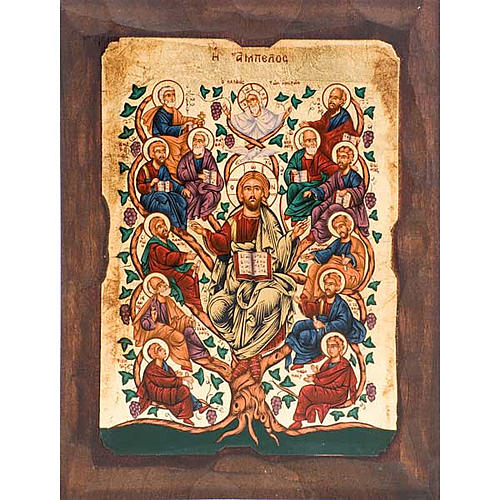
The Tree of Christ and the Disciples. | Image from Holy Art
More than just a symbolic narrative of the people of Israel, their expectations of a Messiah, and their acceptance of Christ, this parable perfectly portrays our Christian life. We are called by the Lord to be part of the Kingdom of God, yet we are more preoccupied with other things that we think are more important and more “real” for us. And when we do come, it’s as if we were just forced to attend the feast that faith has prepared for us. Our faith only comes as a lip service, hindering it from actually giving us a new attire for the feast: hearts that are ready to respond and transform our lives in order to follow Christ more closely. We express our desire for change, to become better persons, but we end up doing nothing beyond words.
It is true that reality is more complex than this, that we think that our exercise of the faith is distinct from the way we feed our families, keep finances alive, and secure our future and ambitions; however, this comes from a perspective that our Christian faith is only fitting on Sundays, that there is a strictly confined space for it that must be set aside from our daily concern. But should it be, when Our Lord calls us to a conversion that happens on an everyday level, when His presence and His invitation to the feast accompanies us in our daily duties and our daily preoccupations?
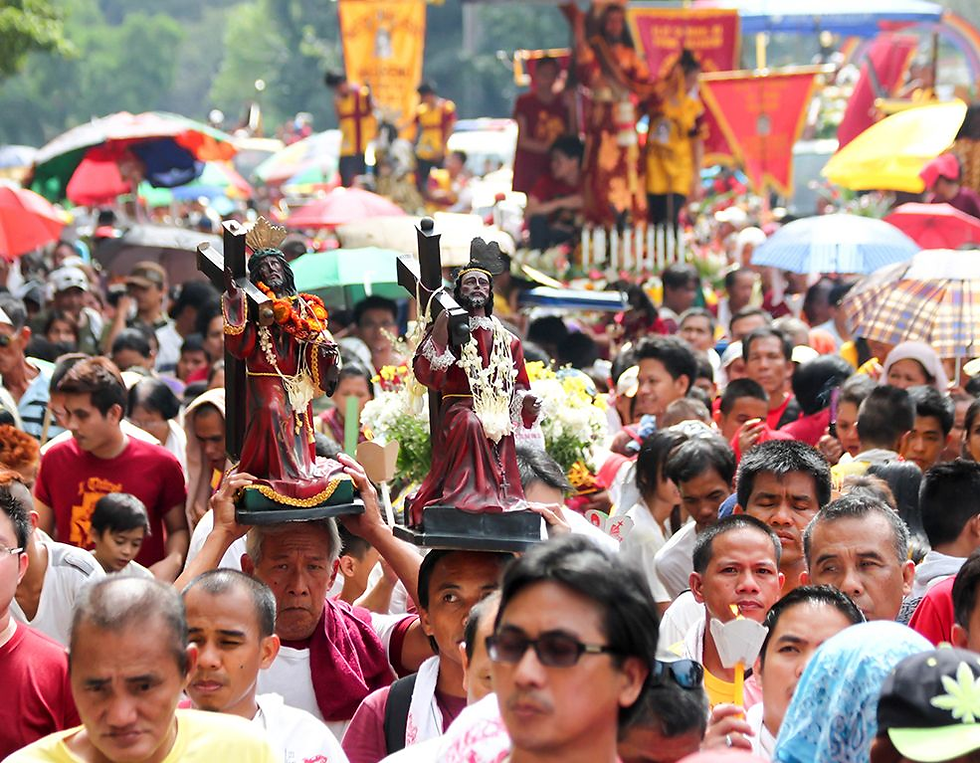
Photo from World Mission Magazine
Perhaps we should take a cue from Saint Paul himself in the second reading, when he figures out that his strength lies not just on what he can do, but more importantly, on what Christ empowered Him to do. We also remember the promise of the Lord to the prophet Isaiah, that he would comfort His people despite their failures and weaknesses in becoming faithful to the Lord. These instances remind us that Our Lord did not even segregate His concerns, and sees that the care of all His creation includes first of all the care and guidance of each individual person. It is through knowledge of this fact that we also see the invitation to a faith which gives us, so to speak, garments fitting for the Feast, those which transform us and enable us to grow in trust and to foster deep relationships with God and neighbor.
Our Lord gently invites us to this kind of life, and we pray that we consider our lives and we begin the path of a true Christian life, characterized by conversion and true witnessing to His kindness through what we do and what we say. Amen.


Comments