

True Forgiveness
Reflection for the 24th Sunday in Ordinary Time by Fr. Earl Valdez
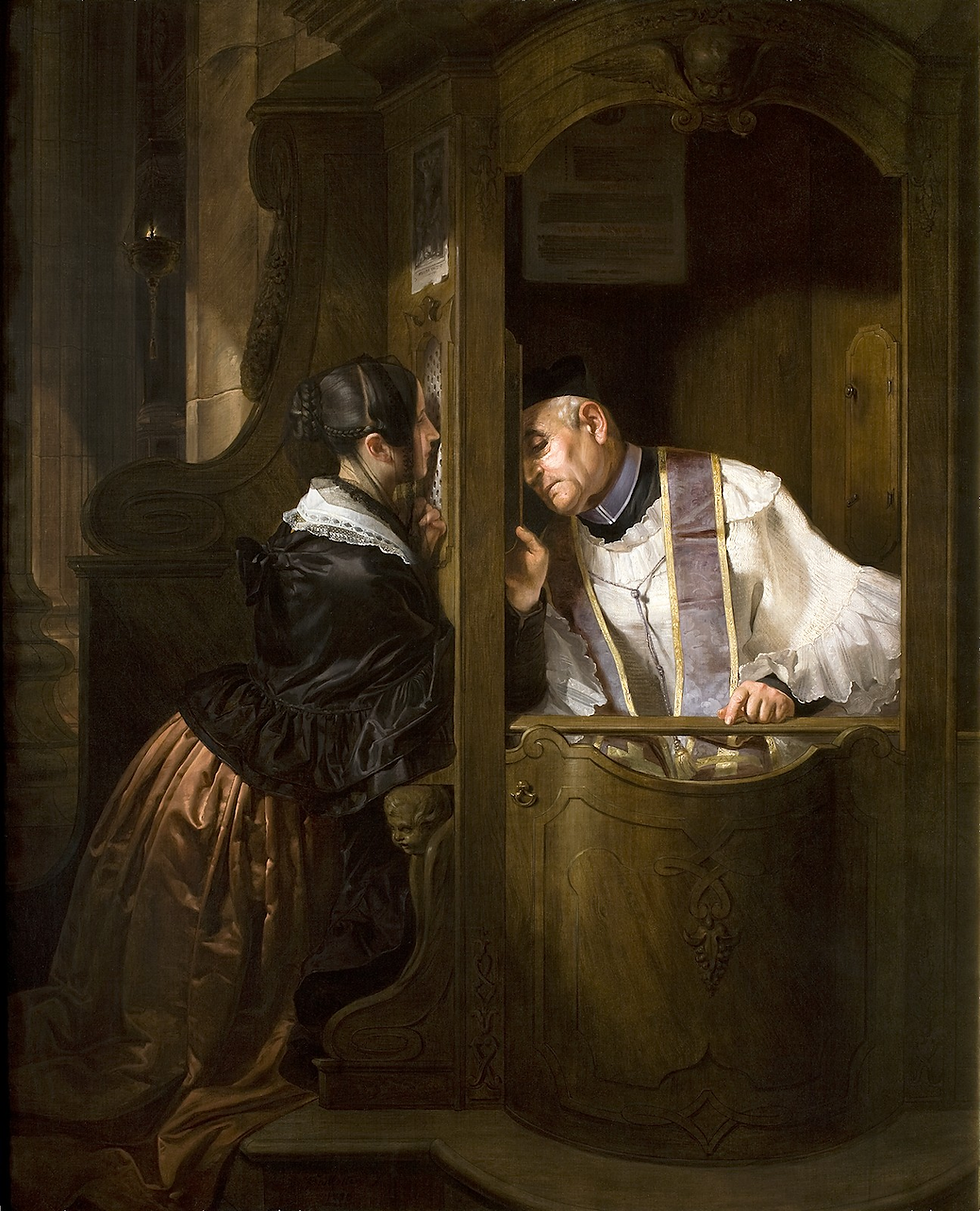
Image from Wikimedia Commons
Whenever the necessity to forgive becomes the theme of mercy, I find myself going back to the common adage “forgive and forget.” While some of us have been following that as advice, I find it difficult to reconcile as one who hears confessions during the sacrament of reconciliation, with people having a clear memory not just of what they have done, but also what has been done to them.
Thus, this led me to ask: is it really possible to forgive while one forgets? Would it really be the best advice when one confronts our own faults, or the faults of others that affected us?

Claude Vignon, “Parable of the Unforgiving Servant”
Image from The World's Artist
The gospel readings for this Sunday touches on the reality of forgiveness, as we hear the Lord's call to forgive in divine proportions: seventy times seven. This means that as much as the Lord pardons us of our faults endlessly, so must we strive to forgive others without limit. But here’s the difficulty in it: the parable tells us that, like the landlord who cancelled all debts, we also must cancel the debts of our neighbor. Now, if we try to make sense of this imagery, do the cancellation of debts mean that we ought to forget what the wrongs of others are and what they made us feel?
I would not want to go into the hermeneutics of this parable and the language that Our Lord used in drawing this comparison. However, my experiences of forgiving and being forgiven tell me two things.
First, Our Lord calls us to a kind of forgiveness that is burdened by the past. It means that our forgiveness in each moment must have that same kind of patience, of understanding, and of mercy. The repeated instances of error should not impose conditions on forgiveness. Despite its difficulty, our faith tells us to forgive all the same, to accept that a series of actions have led to a rupture of relations, and that one gives the possibility for healing and a future in which one has chances to correct what had been wronged.
Second, true forgiveness must be placed within one's memory, and hence forgiving cannot be so without forgetting. More than just remembering that one has been forgiven, one should also remember the gravity of our own faults and errors, so as to be able to learn from them and hope that we become better in the future. And the same goes for those who have wronged us and whom we hope to forgive. We should never forget that we have been wronged and that our relationship was broken at some point in our lives, so as to be able to give others a chance to be better in the future. To keep these memories in the past, not only with what was done but also with how it made us feel, is to open the possibility for the future.

Andrey Yanev, “Forgiveness”
Image from Saatchi Art
Hence, we forgive, and we only do so without forgetting.
I could imagine that in our prayer, the Lord remembers our faults as much as we do, but not with a memory that comes with hatred, anger, and vengeance. He remembers them with mercy, and He tells them to us not to emphasize our weakness and wickedness; rather, He reminds us that we are better than what we were before.
And with hope, we face this reality, knowing how difficult it is to remember and be remembered, in terms of our faults and limitations. Remembering in this unique way is as diffcult as forgiving, and so we ask for the grace to be able to do so, knowing that the Lord knows our faults and forgives them, acknowledging that we are more than just our mistakes and errors, and recognizing as well the goodness in us with which He has created us. Amen.



Comments